

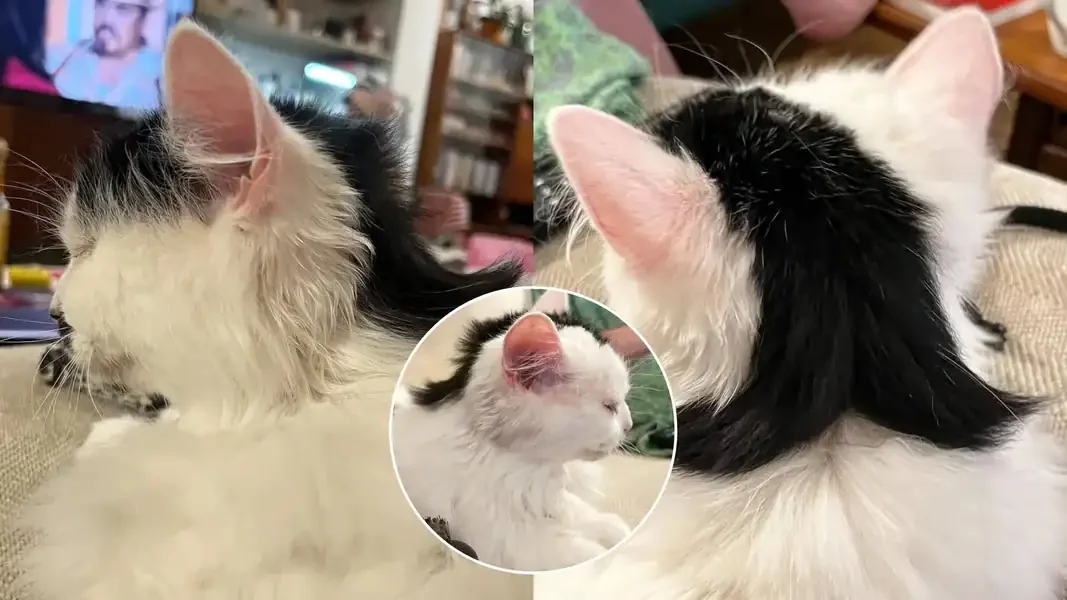
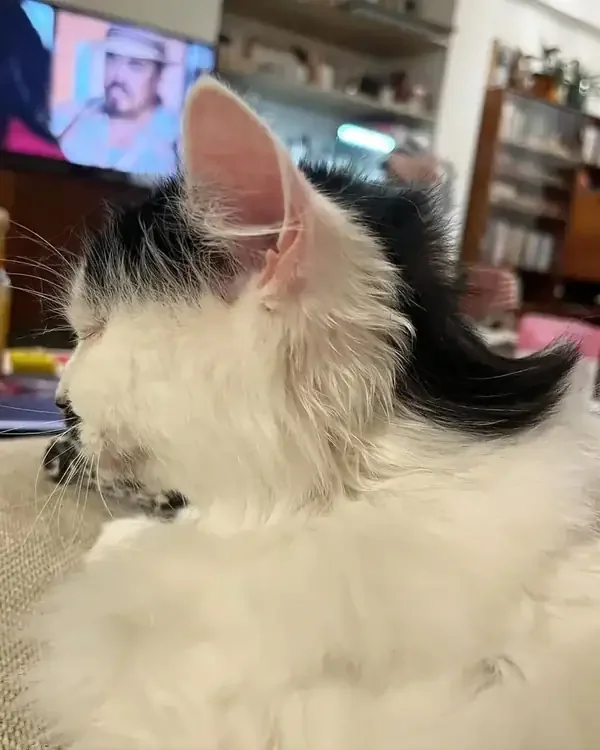
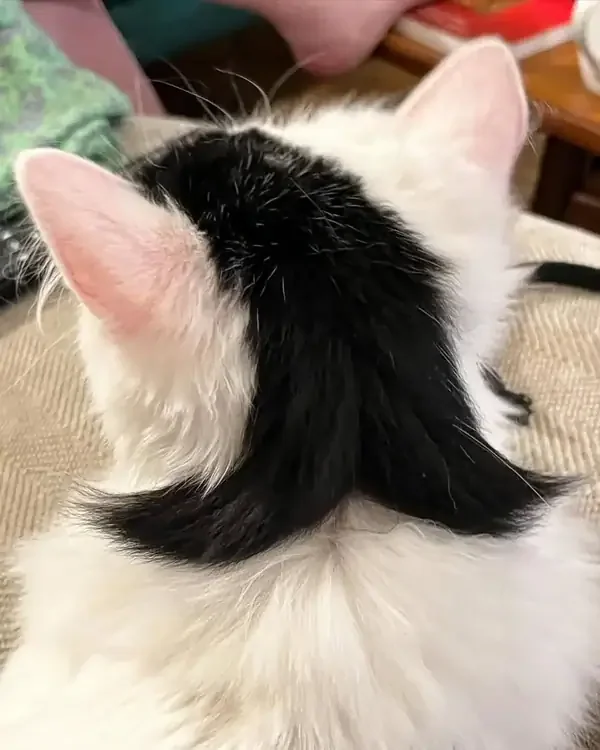
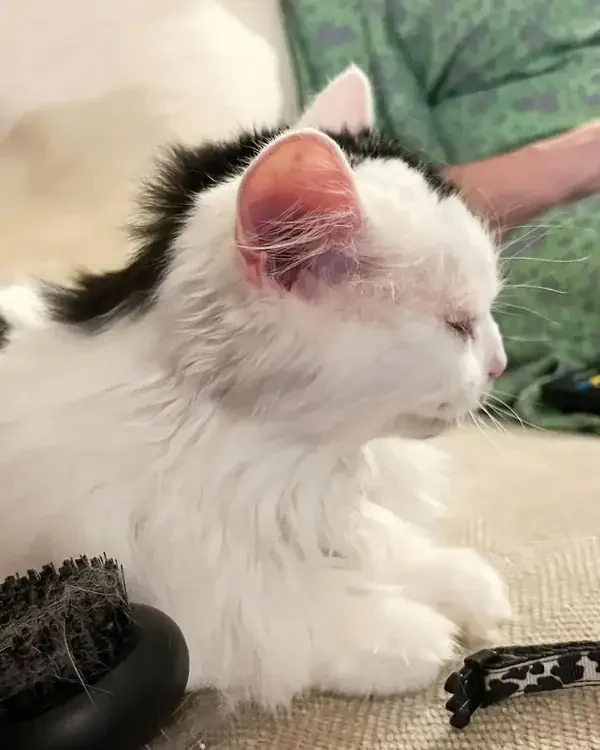
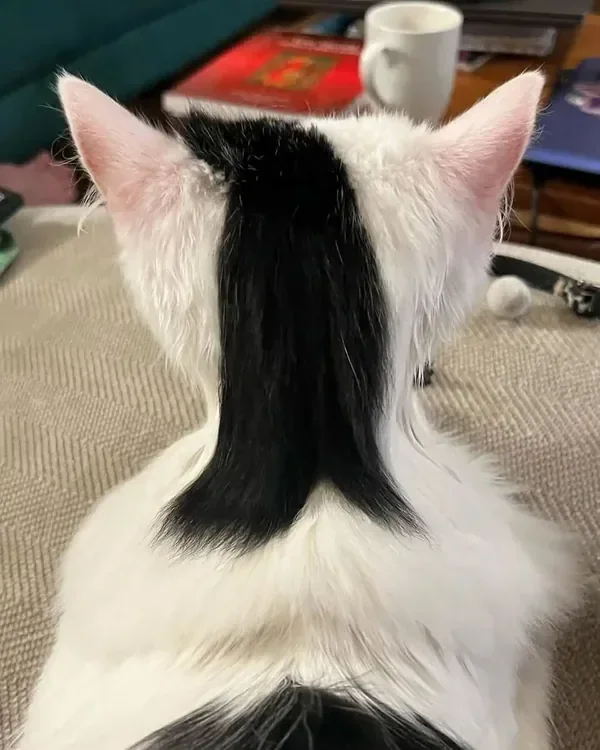
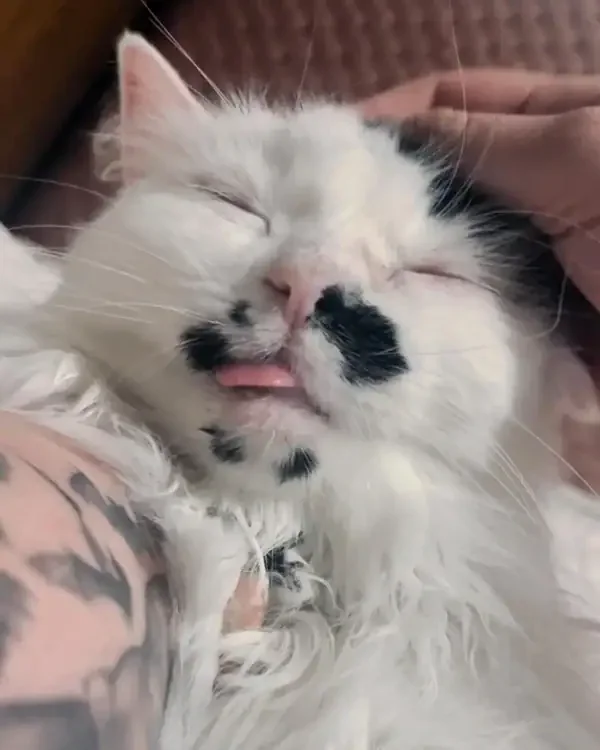
A kitten has drawn attention on social media because its coat pattern resembles a mullet, the hairstyle popularized in the 1980s. The animal appears in posts from the Instagram account @mishy_mishka_moo. Its black-and-white fur creates the impression of a hairstyle, with lighter coloring at the front and a darker area that appears to extend down the back of the head and neck.
The resemblance becomes more noticeable when the kitten is viewed from different angles. Light-colored fur predominates across the front of its head, while a dark band covers the rear portion and continues toward the neck. The contrast between the two colors gives the coat a shape that can look like the familiar hairstyle: shorter in front and longer at the back.
The mullet comparison is visual rather than literal. The kitten has not had its fur cut to create the effect, and the appearance comes from the natural arrangement of its black and white markings. The outline and distribution of the colors suggest a hairstyle when seen in photographs, particularly in side views, even though the animal’s coat is simply its fur.
The pictures circulated on social media and prompted curiosity about the kitten’s unusual appearance. The comparison with a mullet helped the posts attract attention and thousands of admirers online. The hairstyle is often associated with artists from the rock scene of the 1980s. Its defining feature is a contrast in length: hair is shorter at the front and sides, while the back is left longer. That recognizable shape makes the comparison easy to understand when looking at the kitten’s contrasting markings.
A coat pattern like this can occur naturally in cats. The colors and their distribution are influenced by genetic variations that affect melanin, the pigment involved in the coloration of fur. Different combinations of pigment can produce different shades and patterns, including areas that contrast sharply with one another. In this kitten’s case, the light fur at the front and the darker area behind it form the particular arrangement that has drawn attention.
The appearance of a cat’s coat is not created by a single visible mark alone. The overall effect depends on where the differently colored hairs appear and how those areas meet. When one region is light and another is dark, the boundary between them can form a line or shape that stands out. A viewer may then recognize a familiar outline in the pattern, such as the silhouette of a hairstyle.
During feline embryonic development, cells responsible for pigmentation are distributed across the body. The way those cells are distributed can lead to different combinations of markings. As a result, cats can have coats with distinct patches and patterns. Some markings may remind people of recognizable shapes, including geometric figures or hearts. Such comparisons describe what a pattern looks like to an observer; they do not mean the markings were deliberately formed to represent those objects.
The kitten’s coat demonstrates how an ordinary natural variation can appear distinctive in photographs. From one angle, the front and back sections of the head may look less separated. From the side, the difference between the light and dark areas becomes clearer, making the hairstyle resemblance more apparent. The angle changes how the pattern is perceived, while the underlying colors and markings remain the same.
That change in perception helps explain why the images attracted notice. A coat pattern can be familiar in its basic components—here, black and white fur—yet still create an unusual visual impression when those colors meet in a particular arrangement. The mullet comparison gives viewers a quick way to describe the shape they see. It is a comparison based on appearance, not a claim that the kitten’s fur has been styled.
The posts of @mishy_mishka_moo show a kitten whose coat naturally produces that impression. No intervention was used to create the effect, according to the information accompanying the images. The pattern’s distinctive placement, together with the contrast between light and dark fur, contributed to the circulation of the photographs and helped the animal become a web phenomenon. The attention centers on the unusual look of the coat and the way its markings resemble a hairstyle associated with an earlier era.
The example also illustrates the difference between a coat’s biological pattern and the description people give it. The pigmentation pattern is part of the animal’s appearance, while “mullet” is a human label for the silhouette the pattern seems to form. The label makes the visual resemblance easy to communicate, but it does not change what the markings are: naturally distributed areas of differently colored fur.
In this case, the kitten’s appearance comes from the combination of white and black hairs, with the lighter region toward the front and a dark section extending toward the back of the head and neck. The arrangement can look different depending on the viewing angle, and the side view emphasizes the contrast. That natural feature brought the kitten to the attention of social media users and led many people to respond to its distinctive, hairstyle-like appearance.


