

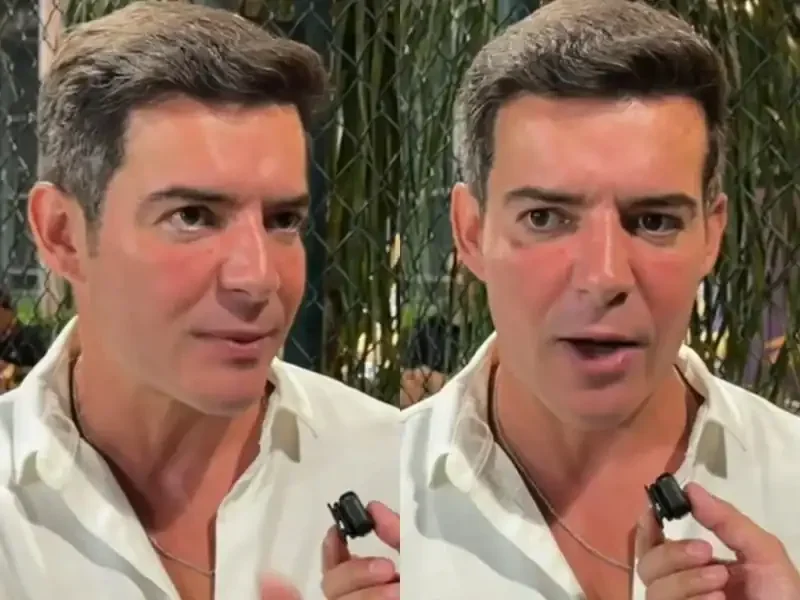
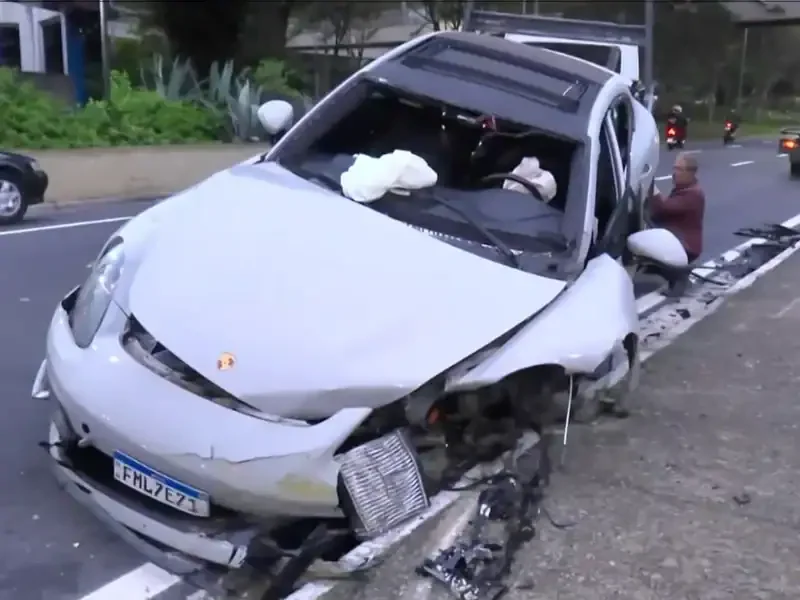

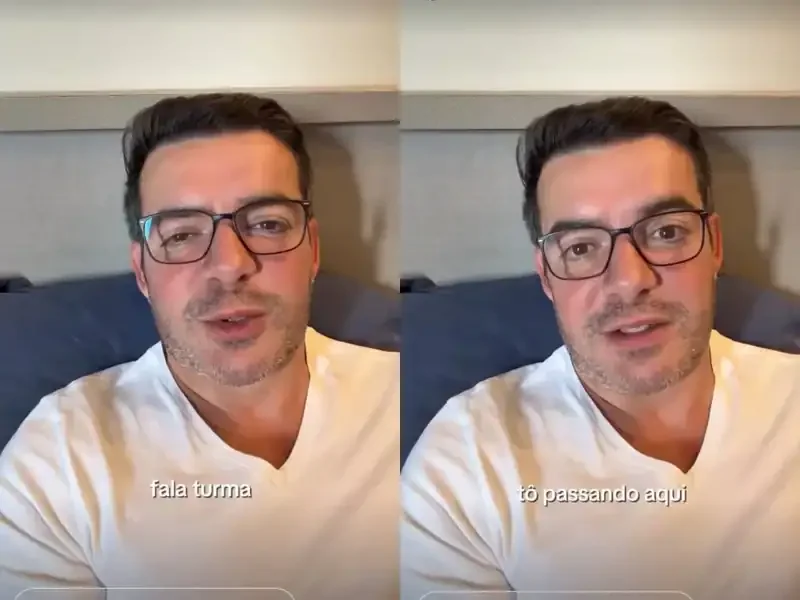
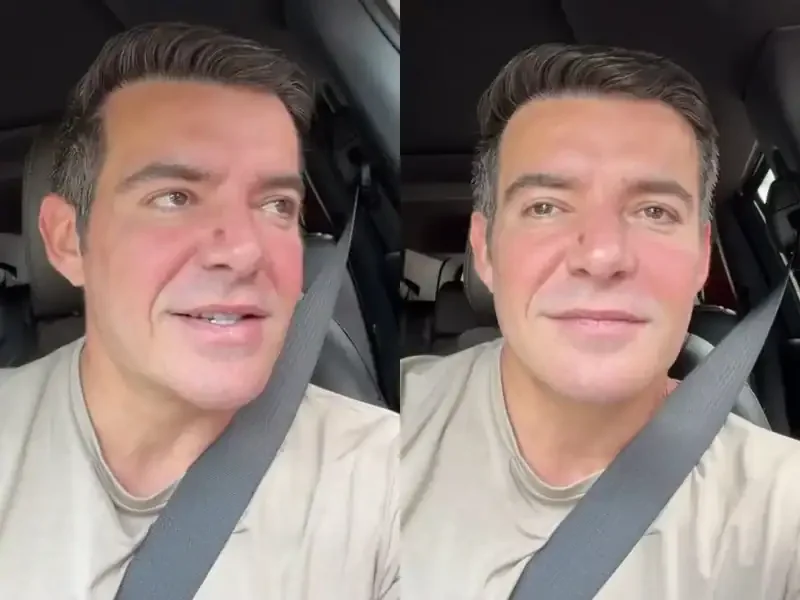
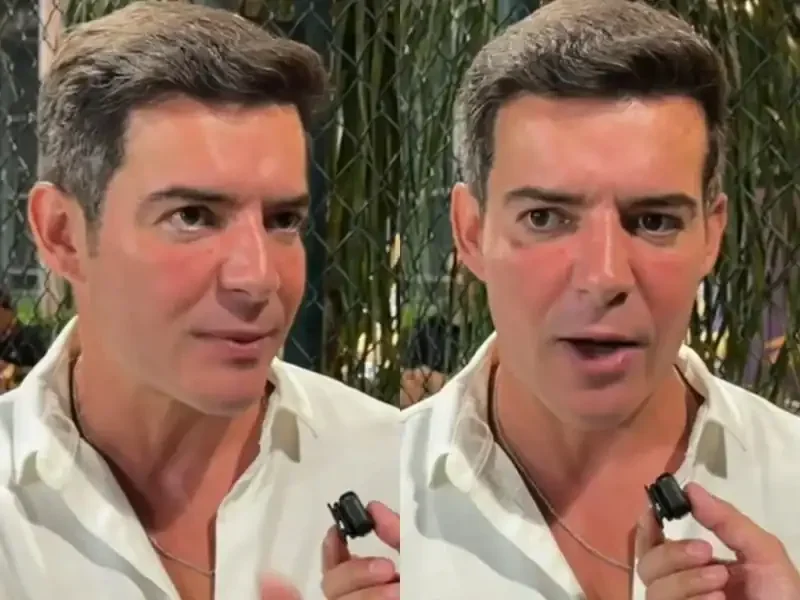
The effects of Belutti’s car accident continue to be felt. After the musician was involved in a crash in Alphaville, in the Greater São Paulo area, and fractured three vertebrae, he said the consequences have extended beyond his physical injuries. In a conversation with journalist Renato Sertanejeiro, the singer, who performs as a duo with Marcos, said he has had difficulty returning to his routine. He also acknowledged that driving again has been challenging for emotional reasons.
“I’m barely driving, too, which is even a psychological issue,” Belutti said. The remark describes a difficulty that has accompanied his gradual effort to resume ordinary activities after the crash. He also recalled going out to watch his son take part in an activity at a club. Although the setting was open, Belutti said he felt dizzy. The episode illustrated how even a routine outing could be difficult during this period of recovery.
Belutti’s account includes both physical and emotional effects, but he did not provide further details in the interview excerpt about the precise circumstances of the crash, his medical treatment or the specific nature of the vertebral fractures. The information he shared was focused on the challenges he has experienced since the accident, including his hesitation about driving, the dizziness he felt during an outing and the emotions that arose when he returned to the stage.
Driving again has been one of the difficulties he identified. A return to driving can involve more than the physical ability to sit behind the wheel and operate a vehicle. For some people, the experience can also bring up anxiety or unease connected to a previous collision. Belutti described his own difficulty as psychological, without detailing the particular thoughts or circumstances involved. His comments therefore point to an emotional barrier, while leaving the specifics of his experience unstated.
The singer’s reference to feeling dizzy during an outing also offers a glimpse of how his recovery has affected activities beyond driving. He said he had gone to a club to accompany his son’s activity and felt dizzy even though he was in an open environment. He did not say what caused the dizziness, how long it lasted or whether it has happened on other occasions. The account establishes that the episode occurred, but does not provide enough information to draw conclusions about its cause.
Belutti also described the emotional effort involved in performing again. He took part in the recording of a special Christmas project, but said he had to keep himself from crying while onstage. “We recorded a Christmas project last week, and I went onstage and kept controlling myself at every moment, like, so I wouldn’t start crying, because it’s just my head moving,” he said.
His description connects the performance with the physical movement of his head and the emotions he was experiencing. He did not say that he left the stage or was unable to complete the recording. Instead, he described trying to contain his emotions during the presentation. The comment indicates that returning to a professional setting has not necessarily meant that the experience feels simple or routine for him.
The performance was part of a Christmas project recorded the previous week, according to Belutti’s account. The excerpt does not identify the project, say where it was recorded or give a release date. It also does not explain whether he had resumed other professional commitments. What he conveyed was that being onstage brought an emotional response that he had to manage while taking part in the recording.
The accident involved a Porsche, the article says, and left Belutti with fractures in three vertebrae. It does not state which vertebrae were fractured, how the injuries were treated or what restrictions, if any, were placed on his activities. Vertebrae are the bones that form the spinal column, and fractures in that area can vary in location and severity. The information available here does not establish the nature of Belutti’s specific injuries beyond the report that three vertebrae were fractured.
That distinction matters because a general description of spinal injuries cannot determine an individual person’s recovery or explain symptoms in a particular case. Belutti’s own comments provide a limited account of his experience: he has found it difficult to return to driving, felt dizzy during an outing and struggled to hold back tears while performing. He did not attribute each experience to a particular medical cause, and the report does not offer a clinical assessment.
The return to everyday activities after an accident can involve multiple kinds of adjustment. Physical recovery and emotional recovery do not necessarily proceed in the same way or at the same pace. Belutti’s account reflects that distinction without specifying a timeline for either. He said that he is having trouble resuming his routine, but did not say when he expects to return fully to his usual activities or whether his difficulties have changed over time.
His comments also do not establish that he has stopped driving altogether. He said he is “barely” driving and described the issue as psychological, indicating that driving has been limited. The account gives no information about how often he has driven, whether he has driven alone or with someone else, or what steps he might take next. It describes a present difficulty rather than a final decision about whether or when he will return to regular driving.
The report likewise does not say whether the dizziness at the club was connected to the crash or to his injuries. Belutti mentioned the episode as an example of the challenges he has faced, but did not identify a cause. Without additional information, it would not be possible to determine whether the sensation was related to his recovery, the circumstances of that outing or another factor.
Despite the emotional strain and difficulties since the accident, Belutti expressed gratitude and emphasized the importance of faith in his life at this time. As he described his recovery and gradual return to commitments, he said, “But God is good! He has taken very good care of us.” His words conveyed gratitude while he continues to navigate the effects he described.
Taken together, Belutti’s remarks portray a recovery that has affected several parts of his routine: getting behind the wheel, going out to accompany his son and returning to a performance setting. The interview excerpt does not provide a medical timeline or predict when those challenges might ease. It records the singer’s account of what he has experienced since the car accident and his acknowledgment that the impact has not been limited to physical injuries.


