

The Earth is full of places that challenge expectations about how people can live and build. Around the world, some communities have features so unusual that they might be mistaken for settings in a science-fiction film or an imaginary world. In some, homes stand over water, boats are central to everyday movement, or houses fit beneath enormous natural rock formations. Others have developed around the demands of a harsh climate or an unusual local economy.
These are real places, not fictional sets created solely for visitors. People live and work in them, carry out everyday routines, and adapt to the conditions around them. Their stories show how geography, construction, infrastructure and community life can combine in distinctive ways. The following eight places illustrate just how varied a settlement can be.
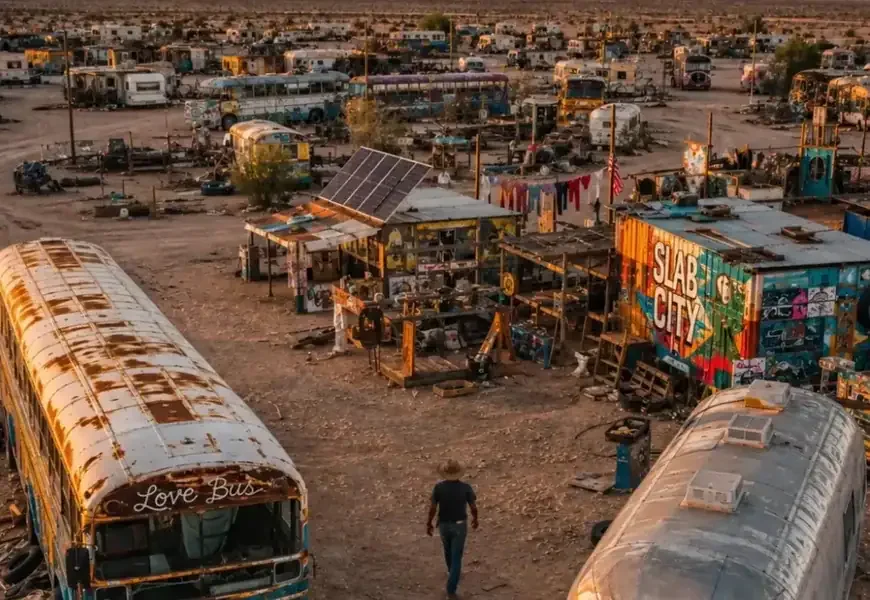
Slab City, California, is a community in the desert that appears far removed from many features associated with modern urban life. It has no public water or sewer system and is not connected to the electrical grid. The community also has no formal local government. That absence of local government does not place residents outside the law: they remain subject to U.S. laws.
The distinction between having no formal local government and being outside the law is important. Local administration and national legal authority are not the same thing. Slab City’s lack of public utility connections also means that it differs from a typical neighborhood served by shared water, sewer and electricity networks. The description presents a community shaped by a combination of isolation from those services and continued connection to the broader legal system.
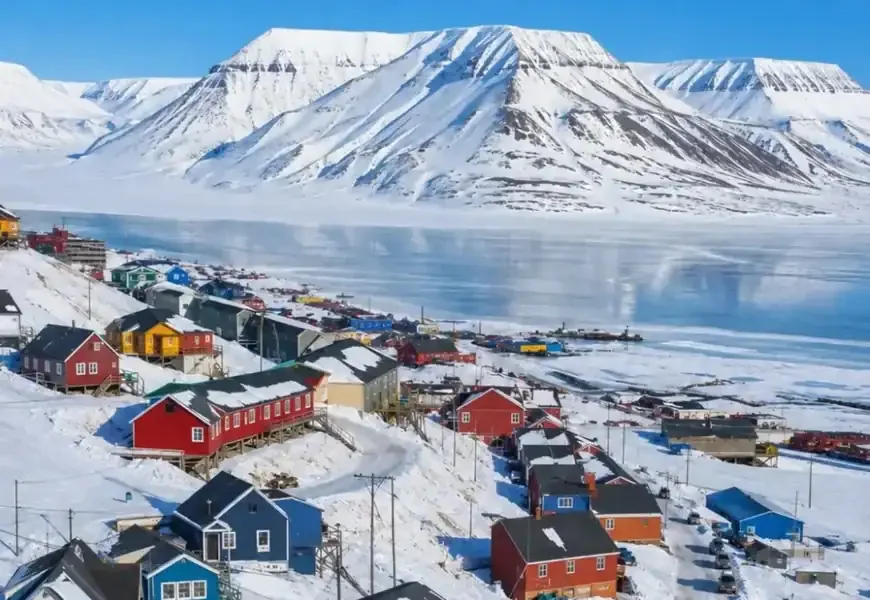
Another settlement is defined by the opposite challenge: extreme cold. There, frozen ground makes burial difficult because bodies buried in the soil decompose very slowly. As a result, burials are highly restricted. People who are terminally ill are often transferred to mainland Norway.
The conditions described show how a climate can affect more than clothing, travel or building design. In this place, the ground’s persistent frozen state influences burial practices and the arrangements made for terminally ill patients. Such circumstances are an unusual but direct example of how local environmental conditions can shape community routines. The information does not describe the settlement as uninhabitable; instead, it shows how residents and local arrangements must account for the consequences of the cold.
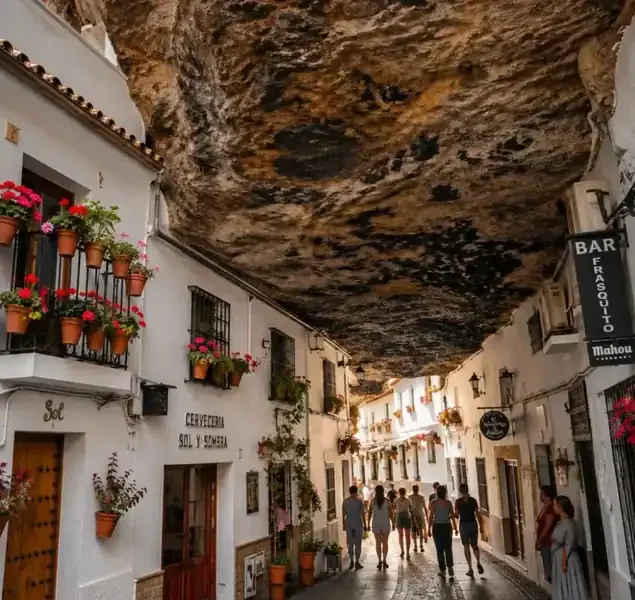
Setenil de las Bodegas, in Spain, is known for homes, cafes and streets built beneath large natural rock formations. In some places, the rock above is not merely part of the scenery: it forms the striking feature around which buildings and public spaces are arranged. The result is a built environment in which natural formations and everyday structures occupy the same space.
The town’s appearance contrasts with the more familiar image of buildings standing apart from cliffs or rock overhangs. Here, large formations are part of the setting for houses and businesses. That arrangement can make an ordinary street or cafe seem unusual to a visitor, even though these are places used for daily life. Setenil demonstrates how the shape of the landscape can influence where and how people build.
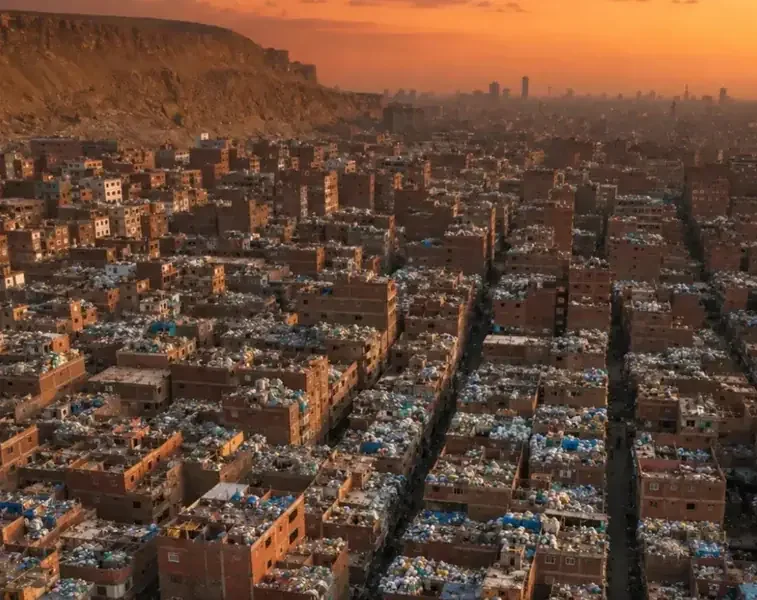
In Cairo, a region known as the Garbage City has an economy centered on collecting and recycling the city’s waste. A large community of workers sorts and processes tons of discarded material each day. Its defining feature is therefore not a particular building style or extreme climate, but the work that organizes much of local economic life.
Collection and recycling involve separating discarded materials and processing them rather than treating all waste as one undifferentiated stream. The description emphasizes the scale of this daily activity and the role of a large community of workers. It also offers a reminder that the systems supporting a major city can extend beyond its most visible neighborhoods. Here, discarded materials are the basis of a local economy and a routine shared by many workers.
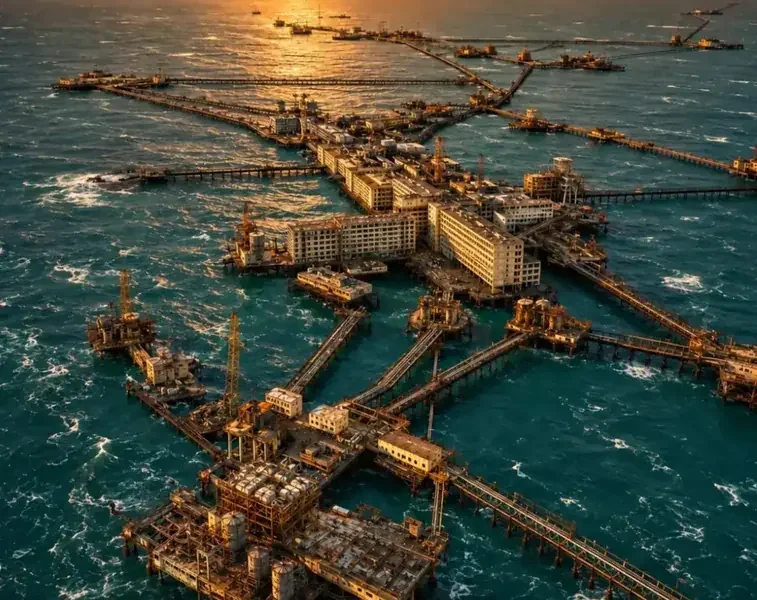
Neft Daslari, in the Caspian Sea, is an industrial settlement formed from interconnected oil platforms. Structures built over the water make it one of the planet’s more unusual maritime settlements. Rather than being organized on an ordinary stretch of land, the settlement is made up of linked platforms in an offshore setting.
The arrangement is distinctive because the platforms are connected to form a place where industrial activity takes place over the sea. The description identifies Neft Daslari as a settlement, while also emphasizing its industrial character and its relationship to oil platforms. Its structures are not simply buildings beside a shore; they are built on the water. This makes the settlement a striking example of how infrastructure can be arranged in an environment that differs from a conventional land-based town.
Giethoorn, a village where boats are central, has many homes in its old center that are reached by canals, bridges and pedestrian paths. Traveling by water is one of the main ways to experience the area. The village’s layout means that movement through the center is closely tied to its waterways and to routes on foot.
That combination gives the canals a practical role as well as a visual one. Bridges and pedestrian paths provide ways to reach homes, while boats offer another means of getting around. The description does not suggest that every part of the village is accessible only by boat; it notes that many homes in the old center are accessed through a mix of canals, bridges and paths. Giethoorn’s character comes from the way these routes fit together.
Monowi, in Nebraska, is described as a town with an official population of one. Its only resident, Elsie Eiler, also serves as mayor, works as the local bar attendant and acts as librarian. The example is striking not only because of the town’s population, but also because one person holds several roles associated with community life and local administration.
A mayor’s duties are connected to local government, while a bar attendant and librarian provide different kinds of services. In Monowi, those roles are all carried out by Eiler, according to the account. The description presents the town as a community administered by a single person. It does not mean that the places and responsibilities mentioned are interchangeable; rather, it highlights how one resident takes on multiple functions in a town with such a small official population.
Together, these communities show a range of ways that settlements can differ from familiar urban patterns. Slab City is described through its lack of public utilities and formal local government. The extremely cold settlement faces restrictions connected to frozen ground. Setenil de las Bodegas incorporates large natural rock formations into its built environment, while the Garbage City’s economy centers on sorting and recycling waste. Neft Daslari is formed from platforms over the Caspian Sea, Giethoorn’s old center relies on canals, bridges and footpaths, and Monowi has one official resident who holds several community roles.
The examples also demonstrate that an unusual appearance is only part of what makes a place distinctive. The ways people access homes, use infrastructure, respond to environmental conditions and organize work all contribute to how a community functions. These places are not imaginary settings: they are real environments where people maintain their routines within the conditions described. Their differences underline how geography, construction and local circumstances can shape the experience of living in a town or village. Tags: Unusual Cities


